Seen through spiritual wisdom, the phenomenon of Vietnamese people (almost exclusively) particularly loving and singing ABBA's Happy New Year at New Year, despite its dark aspects and melancholy energy, is no coincidence. It reflects a collective consciousness field very characteristic of the Vietnamese people.
“Happy new year
Happy New Year
May we all have our hopes, our will to try
May we have abundant hope and the will to strive upward
If we don’t we might as well lay down and die
Because otherwise we might lie down and die
You and I
You and I”
Let us reflect on each layer, very slowly.
1. “Happy New Year” is not a song of jubilation but a farewell, an attempt to encourage oneself that the future may be better, despite not yet understanding the cause-and-effect relationships of what has happened (so it will continue to repeat).
If you listen closely (not with your ears, but with your heart), this song has no pure vibration of a beginning, no energy of birth, joy, or opening. Instead, it carries nostalgia, regret, weariness, and faint hope.
This is not a “congratulatory” song, but a farewell to a painful past that has never been healed, wrapped in a festive exterior, outwardly saying, “I'm okay. I will (try my very best to) look okay.”
In terms of energy, this is the song of someone who has suffered many losses and will continue carrying dark corners of the past into the future, rather than someone eagerly entering the future and actively creating a new cycle for themselves.
When composing and performing this song, the members carried the energy of crises of faith and relationships, breakups and dissolution, depression and anxiety, along with much repression, effort, and pretense…
2. Why do Vietnamese people resonate so strongly? Because it fits our nation's “deep” and “heavy” collective memories.
Vietnamese people carry many ‘inherited memories’ of war, separation, and loss. A long history of endurance, sacrifice, and patience. Accustomed to living in the state of ‘well, just try to hold on a little longer.’
That is why gently melancholy songs with fragile hope can touch so deeply.
Happy New Year speaks exactly that “inner language.” In spiritual terms, the song carries this frequency: unfinished reincarnation. Unresolved collective karma. Hope not yet accompanied by true faith.
We sing this song at the turn of the year—the moment of an energy portal's transition—as though entering a new year while not truly releasing the old one in our hearts. Our mouths say “new year,” but our hearts still look back at what has been lost.
Why do many other countries NOT sing? Because:
For them, the new year is a ‘celebration of life.’
For Vietnamese people, the new year is often a ‘moment of reflection & survival.’
Vietnamese culture unconsciously carries the belief:
“So happy that I'm afraid…
because life does not let us enjoy ourselves for long.”
We carry many uneasy memories from the past, of passing through “moments of transition” with anxiety, fear, and loss. Unconsciously, we fear facing loss and impermanence again, and Happy New Year has triggered those memories.
“Seems to me now
Now, to me
That the dreams we had before
The dreams we once had
Are all dead, nothing more
They are all dead; nothing remains
Than confetti on the floor
Apart from the paper petals on the floor”
This phenomenon is not for blame or criticism. It is a whisper that:
“We have been through so much suffering.
We do not yet know how to experience joy fully.
But we still have not given up.’
And that is the Vietnamese people's greatest strength: not dazzling, not loud, but deeply enduring.
3. What lesson does this teach us? Everyone can become more mindful by understanding it.
Unlike Western culture, where people speak when sad and resist when angry, Vietnamese people smile despite sadness and wish others well despite pain. Happy New Year is like saying, “I am not really okay, but I still wish you peace.”
It is “compassion tinged with sadness,” very… Vietnamese. For Vietnamese people, Lunar New Year means cleaning the ancestral altar, remembering those who have passed away and looking back on a year of wrongs and rights, losses and what remains.
Looking at the negative side, Vietnamese people can accept darkness. They do not deny it. They do not reject it. They embrace it, live with it, and keep going.
This is the sign of a nation carrying a healing “mission.” Hearing the world's sadness. Touching humanity's fragility. Still choosing hope despite uncertainty. That is the potential of a nation that can serve as a “bridge for healing.”
However, the song's energy has not yet “touched” true healing. It retains confusion and uncertainty, forcing oneself to struggle onward without a foundation of wisdom (inner understanding) and genuinely deep love (connection with one's sacred inner self). In fact, its energy closely resembles that of many entrepreneurs, working people, and families in society.
Perhaps it is time for every Vietnamese person to ask:
Do we want to enter the new year through nostalgia or full presence?
Can we allow ourselves joy without guilt?
Can we sing songs of life, not merely endurance?
When collective consciousness shifts, the song chosen for New Year's Eve will change by itself.
When you understand the past, the future will not be endless repetitions of “an old past.”
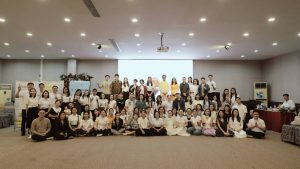
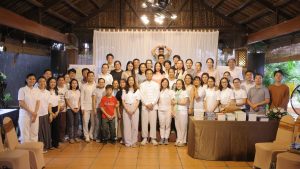
At Summit 2025: You Always Have a Second Chance, we will experience the festive energy of welcoming the new year and properly practice the ability to close an old cycle and create a new cycle of destiny for ourselves.
We hold an annual Summit each year, and this year was the first in-person one since Covid.
Just one program in the entire year.
An occasion to reunite and return together.