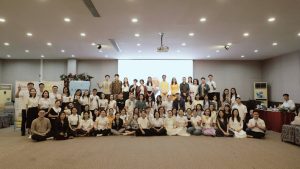
Startup incubation emerged as a tool for economic and social development in the early 1980s, initially in the United States and Europe, before spreading worldwide.

Toledo's new $500,000 ‘Infant Industry Incubator’.
The formal concept of a business incubator originated in the United States in 1959, when Joseph L. Mancuso opened the Batavia Industrial Center in a warehouse in Batavia, New York.
By the 1980s, incubators began spreading to the United Kingdom and Europe through various related forms, such as innovation centers, small businesses and technology/science parks.
Today, incubation is no longer confined to developed countries but is being widely implemented in developing countries.
In Vietnam, this environment began to flourish in 2015–2016 with pioneers such as FPT, Vietnam Silicon Valley and Saigon High Tech Park Innovation Center, and more recently with promising newcomers such as NINJA Accelerator and the BambuUP innovation connection platform.
The incubator model
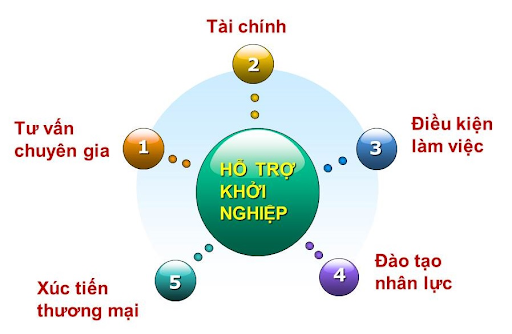
The incubator model usually focuses on 5 core foundations: finance, working conditions, workforce training, trade promotion, and expert advice.
Incubation can be understood as the stage between having an innovative idea and turning that idea into reality (a product, service, platform, business model, etc.).
Startup support organizations offer programs specially designed to help young startups innovate and grow. They usually provide workspace, mentoring, education, and access to investors for startups or entrepreneurs.
These resources allow companies and ideas to take shape while operating at lower costs during the early stages of business incubation.
Business incubators are considered catalysts for regional or national economic development.
This form is divided into five types: academic institutions; nonprofit development corporations; development joint ventures; venture capital firms; and combinations of these companies.
1. Academic organizations
Usually intended for university students and operated by universities or through academic affiliations.
One organization pioneering high-quality training programs and effective entrepreneurship support systems for Vietnam's business startup market is YUP training academy.
YUP regularly organizes entrepreneurship training & support programs with measured outcomes and continually works to address the current challenges in Vietnam's startup environment flexibly.
2. Nonprofit development corporations
This program may specifically accept public-benefit-oriented companies using incubator facilities to stimulate economic development.
3. Joint-venture development
These programs are investment opportunities or ways to fund subsidiaries, develop technology, or seek partnerships.
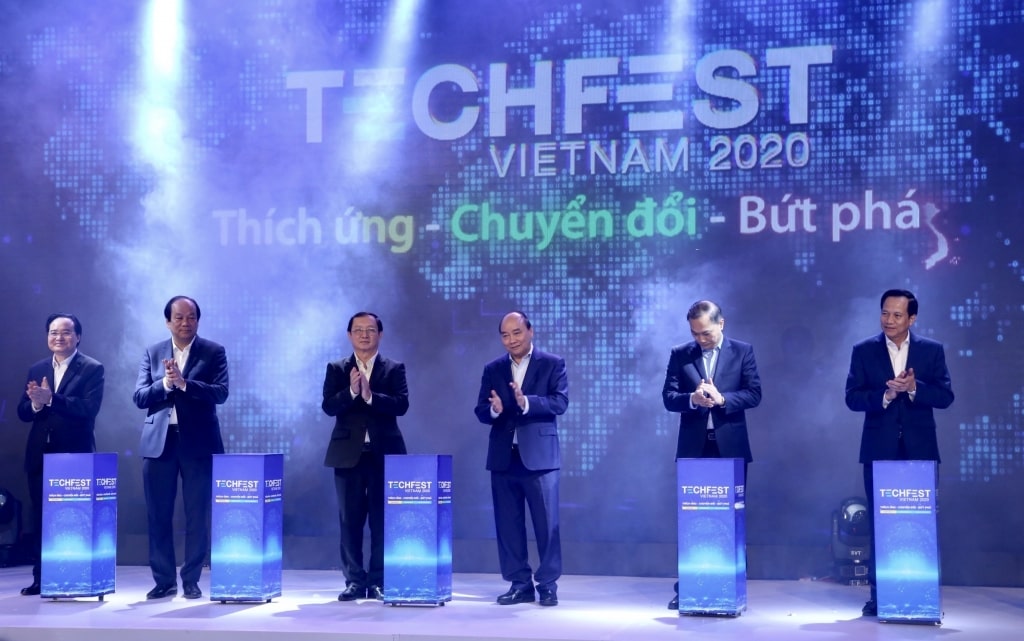 Prime Minister Nguyễn Xuân Phúc and ministry and sector leaders perform the opening ceremony of Techfest Vietnam 2020.
In Vietnam, these programs are becoming widespread and growing. In technology, notable innovative startup programs such as TECHFEST have emerged.
TECHFEST 2021 aims to promote technology solutions from innovative startups and an “open” innovation platform for solving societal problems during Covid-19 and supporting post-Covid-19 economic recovery.
While TECHFEST focuses solely on technological solutions, the BambuUp innovation platform is an ecosystem centered on two main areas, entrepreneurship and creativity, aiming for ‘open,’ comprehensive, multidimensional innovation connections.
The BambuUp platform will serve as a hub for meaningful connections between innovation solution providers and those seeking such solutions.
Specifically, the innovation provider will supply innovative ideas and solutions. Then, in addition to providing 5 basic elements: finance, working conditions, workforce training, trade promotion, and expert advice.
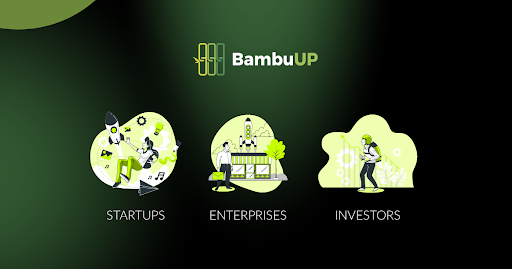
The BamBuUp platform connects innovation providers with organizations seeking innovation solutions.
The BambuUp platform also offers services in business operations, entrepreneurial skills, R&D capabilities, training, consulting, and connections with organizations seeking innovative solutions.
The BambuUp incubator is an open community that sparks creativity and encourages entrepreneurship.
4. Venture capital firms
Some venture capital firms establish incubators as an investment opportunity. These facilities may invest in startups in exchange for equity or provide additional capital during the program.
The incubator trend in Vietnam
In 2019, Vietnam had the third-highest entrepreneurship rate in Southeast Asia, with the emergence of accelerators, incubators, and coworking spaces.
Cities such as Hanoi, Ho Chi Minh City, and Đà Nẵng are rapidly becoming innovation centers.
Prominent incubator fields today: Technology, creativity, education, Blockchain.
Zone Startups is a prime example of accelerator programs.
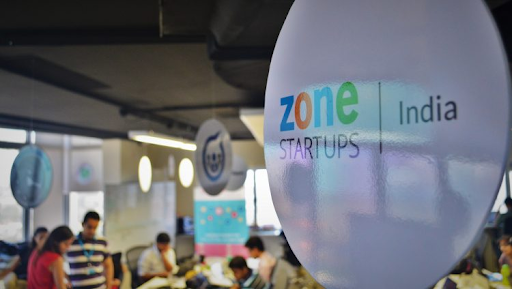
Global Zone Startups launches in Vietnam.
The program provides practical strategies and tactics to guide startups seeking to accelerate market validation and customer acquisition, as well as access to investors, corporate partners, and mentors.
The participation of many “seed nurturers”
The development and success of any incubator cannot be discussed without the contribution of its ‘cultivators’: founders experienced in both the theory and practice of entrepreneurship.
In Vietnam, many prominent advisers take part in judging startup competitions, including Professor Phan Văn Trường, Shark Nguyễn Hòa Bình, Lê Diệp Kiều Trang—Executive Chair and Chief Financial Officer of Avero in Vietnam—and especially Tạ Minh Tuấn, known as an entrepreneur who powerfully inspires the startup movement.

Prof. Phan Văn Trường – founding member of the Vietnam Agricultural Entrepreneurship Club, with nearly 60,000 members.
Prof. Phan Văn Trường is on the evaluation panel for the “Phoenix Entrepreneur” competition organized by Fibo Capital Vietnam.
From 1975 to 2004, he worked at many of the world's leading companies in consulting and economics (SAMA METRA International), transport and power equipment (Alstom), clean water and wastewater (Suer), and oil and gas (WahSeong)… in roles ranging from engineer to chief executive and chairman.
Upon returning home, he taught for free at universities to help young Vietnamese people develop systematic thinking.
He is also a founding member of the Vietnam Agricultural Entrepreneurship Club, which has nearly 60,000 members.

Nguyễn Hòa Bình – Founder and Chairman of NextTech Group.
Nguyễn Hòa Bình, Founder and Chairman of NextTech Group, is also a prominent mentor at the incubators.
He expresses empathy for the loneliness and scarcity of the start-up phase, positioning himself as a ‘kindred friend’ to Vietnamese start-ups. He wants to accompany founders through difficulties on the road to success while optimizing their time and costs.
When speaking of ‘transformative education,’ we have CEO Tạ Minh Tuấn.
Besides being an entrepreneur, he is a senior trainer for many major domestic and international businesses, including ANZ Bank, Honda, Dutch Lady, Shiseido, and others.
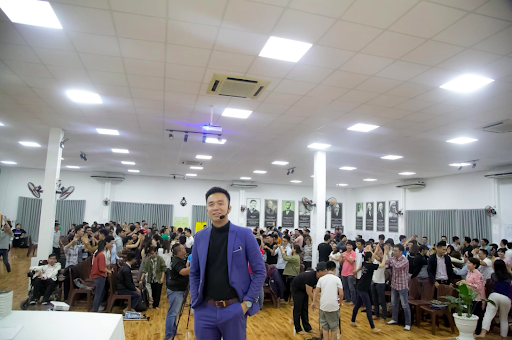
Tạ Minh Tuấn believes Vietnamese people should take a more compassionate view of other people's failures. Do not disparage them. Let them try.
He and his philosophy of transformative education have accompanied many founders as they turned revenue from negative to positive during the COVID-19 pandemic.
According to him, business requires not only knowledge, skills, or tools, but transformation of the person. Entrepreneurs need a heart for their businesses, creating entrepreneurs of character in the 4.0 era.
Explaining the growth of startup incubators
First, the factor driving this innovation ecosystem is its young population.
With an average age of just 30, Vietnamese citizens are knowledgeable about technology and digital activities.
Second, high internet connectivity and mobile device penetration are driving e-commerce and enthusiasm for digital startups.
Third, the incubator model has succeeded and been adopted by various countries. It includes a supportive environment that facilitates the creation of new ventures and the realization of growth potential, while giving these businesses access to a variety of business development resources.
Finally, it stems from many new ideas emerging without sufficient economic or financial capacity or practical experience, so they need a cradle to nurture them.
Entrepreneurship is a major wave in Vietnam.
This field also received government attention when 2016 was designated Startup Nation Year, promoting entrepreneurship among businesses and young people.
This demonstrates that FPT has succeeded as a pioneer in the startup movement.
Looking back through its history, at each stage of development, FPT has experimented with starting businesses in various fields.
FPT officially established an “incubator” for “money seedlings” in 2005.
The “FPT Incubator” launched to support talented young people determined to build businesses and to seek FPT's next business opportunities.
The first three projects of the “FPT Incubator” at that time were Television Services (FPT Media), Training (FPT Đông Du Japanese Language Center), and Online Music (FPT Music).
All three projects achieved a measure of success, laying the groundwork for FPT to establish FPT Japan, which currently contributes up to 50% of its globalization revenue.
FPT Music, the predecessor of nhacso.net, continues to this day.
In the media, Vnexpress also pioneered a dedicated startup section.
Businesses owning these communication channels laid the groundwork for today’s fertile startup incubator environment in Vietnam.
Recently, BambuUp also released the ‘Vietnam Open Innovation Landscape 2021’ report, the first to provide a map of the startup ecosystem.
Accordingly, the report provides a startup map covering 9 prominent sectors: Retail, financial technology (Fintech), education technology (Edutech), healthcare technology (Healthtech), marketing and sales technology (Martech & Salestech), Sustainability, supply chains (Logistics), agricultural technology (Agtech & Foodtech), and Travel & Tourism.
Hồng Trâm – Trends Việt Nam
Read the original article at here!